


AI That Keeps the Game Fair and Fun
At a glance
CLIENT
A European online gaming studio
SERVICE
- AI moderation design, AI software development services, machine learning consulting services, big data consulting services, data analytics consulting services, custom software development services
INDUSTRY
- Telecom, Media & Entertainment / Gaming
A European online gaming studio had grown its flagship team-based online shooter from a niche title into a popular competitive game with hundreds of thousands of active players. Alongside the growth came problems: rising toxicity in voice and text chat, sophisticated cheaters using automated tools, and increasingly complex monetization campaigns that often felt intrusive rather than rewarding. Player reports and community forums highlighted frustration with abusive behavior and perceived unfairness, while early signs of churn appeared in key regions.
LeanCoded partnered with the studio to build an AI-based moderation and personalization platform designed specifically around fast-paced multiplayer gameplay. Over 12 months, we deployed models that automatically detect toxic behavior in text and voice, flag suspicious gameplay patterns, and support a new personalized offer engine for cosmetic items and events. The result: measurable reductions in toxic incidents, better targeting of in-game offers, and clearer visibility on player retention and matchmaking quality for producers and operations teams.
When Fair Play Depends on Manual Reports
Before the program, the studio relied heavily on manual player reports and a small internal team to review them. That meant abusive chat and suspicious gameplay often went unnoticed unless someone took the time to complain. Even then, the moderation backlog could stretch into days. Meanwhile, producers had limited visibility into how negative behavior correlated with churn. Analytics focused on aggregate KPIs such as daily active users and average revenue per user, not on how individual behavior patterns affected the community.
At the same time, monetization was driven mostly by global campaigns around new skins and seasonal content. Offers were the same for everyone in a region, regardless of spending history or typical playstyle. This limited the impact of promotional events and sometimes triggered accusations of “cash grabs” from players. The studio needed a way to turn its large volume of match, chat and purchase data into real-time signals: who might be cheating, where toxicity was rising, which players were most likely to respond to specific cosmetic bundles, and how these factors impacted retention.
From Fragmented Signals to an AI Moderation and Personalization Platform
LeanCoded started by aggregating and structuring the data the studio already had: match logs, in-game events, chat transcripts, basic voice features, and purchase histories. Using data analytics consulting services and big data consulting services, we designed a data model that aligned gameplay events with player identities and time, creating a unified view of behavior across matches and channels. On top of this foundation we introduced three families of models: a toxicity classifier for chat, pattern-based detectors for suspicious gameplay, and propensity models for cosmetic purchases and event participation.
Instead of inserting AI as a separate tool for community managers, we integrated it directly into existing workflows and dashboards. Real-time toxicity flags feed into an internal review console and in-game enforcement logic. Cheating risk scores are combined with traditional anti-cheat signals. Personalization models inform the offers displayed in the in-game store and event rewards, using rules defined by the monetization team. The combination of AI software development services, machine learning consulting services and custom software development services turned static logs into a continuous stream of actionable insights.
Building a Fairness Engine Around the Game
The studio and LeanCoded agreed early on that any AI-based system had to respect gameplay dynamics and community norms. We defined clear objectives: reduce visible toxic incidents, shorten the time abusive behavior persisted in matches, cut the rate of repeat offenders, and improve the conversion and satisfaction of players exposed to personalized cosmetic offers. We also set conservative guardrails to minimize false positives that could undermine trust in the system.
On the moderation side, we trained text models on millions of historical chat messages across multiple languages, labeling not only explicit slurs but also harassment, threats and targeted bullying patterns. For voice chat, we combined acoustic features with transcripts produced by a domain-tuned speech-to-text service. For cheating detection, we developed pattern-recognition models on top of match telemetry—sudden accuracy anomalies, impossible movement patterns, and characteristic signatures of known exploits—while cross-checking against network and anti-cheat data. These models fed into a ruleset that distinguished between automated immediate actions (such as muting for clear slurs) and cases requiring human review.
For personalization, we built propensity models predicting the likelihood of purchase for categories of cosmetic items (character skins, weapon skins, seasonal bundles) and the probability that specific players would respond to limited-time events or loyalty rewards. Using data analytics consulting services and big data consulting services, we structured player cohorts by spending profile, preferred roles, cosmetic preferences and social behavior (e.g. playing in premade squads). The offer engine then combined model scores with simple business rules to assemble bundles and price points that matched each player’s history and regional constraints.
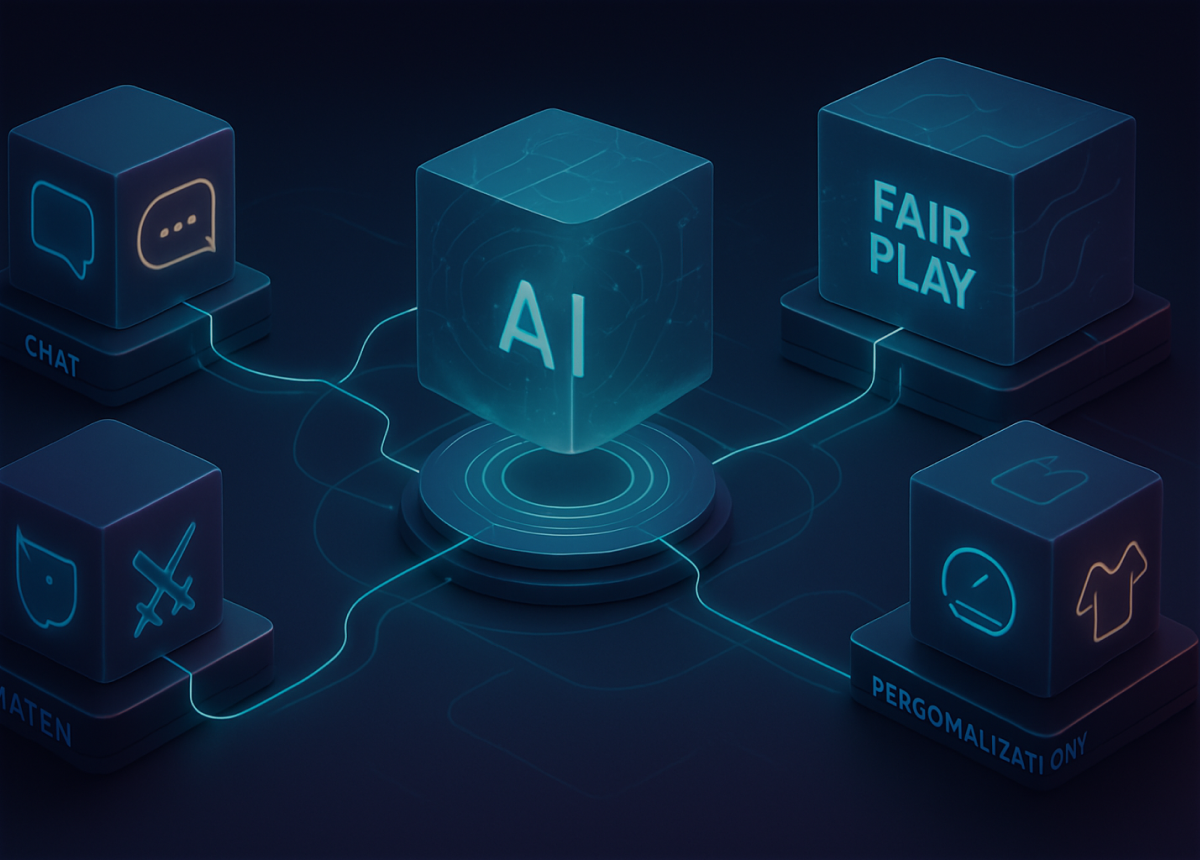
End-to-end data foundation for behavior and revenue
Multi-channel toxicity detection and automated responses
Cheating risk scoring from gameplay patterns
Propensity-based personalization of cosmetic offers
Producer and ops dashboards for retention and fairness
How LeanCoded Used AI to Protect Play While Supporting the Business
The studio did not just want to “police” its community; it needed an AI system that would actively protect fair play, support honest players and sustain a healthy revenue stream without turning into an intrusive cash machine.
- Real-time shields against abuse
AI models scan in-game text and basic voice features in real time, muting severe abuse and surfacing edge cases for quick review so that toxic behavior is contained within seconds, not days. - Smart focus on true cheaters, not top players
Risk scores distinguish legitimate high-skill performance from suspicious patterns, helping human anti-cheat specialists focus on the right cases rather than manually sifting through endless reports. - Fair and attractive in-game offers
Propensity-driven cosmetic bundles and event rewards feel relevant to each player segment, supporting revenue growth without aggressive, one-size-fits-all promotions. - Clear visibility into retention and fairness
Producers and community managers use shared dashboards to understand how conduct, sanctions and offers influence player retention and satisfaction, making fairness part of everyday decision-making.
Impact on Community Health, Revenue and Retention
Within nine months of full deployment across the studio’s main European markets, AI moderation and personalization delivered measurable improvements. The rate of severe toxic chat incidents per thousand matches dropped by roughly one third, while the average time a toxic player could continue abusive behavior before being muted or sanctioned decreased significantly thanks to real-time detection. Repeat offenses from previously sanctioned players were reduced as clearer consequences and faster responses made the rules more credible.
On the personalization side, players identified by propensity models as likely cosmetic buyers increased their average spend on character and weapon skins by around one third, while overall spending in the broader player base remained stable. At the same time, satisfaction with “overall fairness of the game environment” improved in community surveys, and cohorts that were previously more exposed to abuse showed better medium-term retention and faster return to play after intense sessions. By combining AI software development services, machine learning consulting services, big data consulting services, data analytics consulting services and custom software development services, the studio transformed its approach to community management and monetization—using AI not only to detect bad behavior, but to reinforce a healthier and more rewarding game experience.