


One Azure Backbone for an Industrial Group
At a glance
CLIENT
A European industrial and mining group
SERVICE
- Cloud strategy and migration to cloud, Azure landing zone design, infra modernization, cloud devops, reliability engineering, managed operations
INDUSTRY
- Industrial Manufacturing & Mining
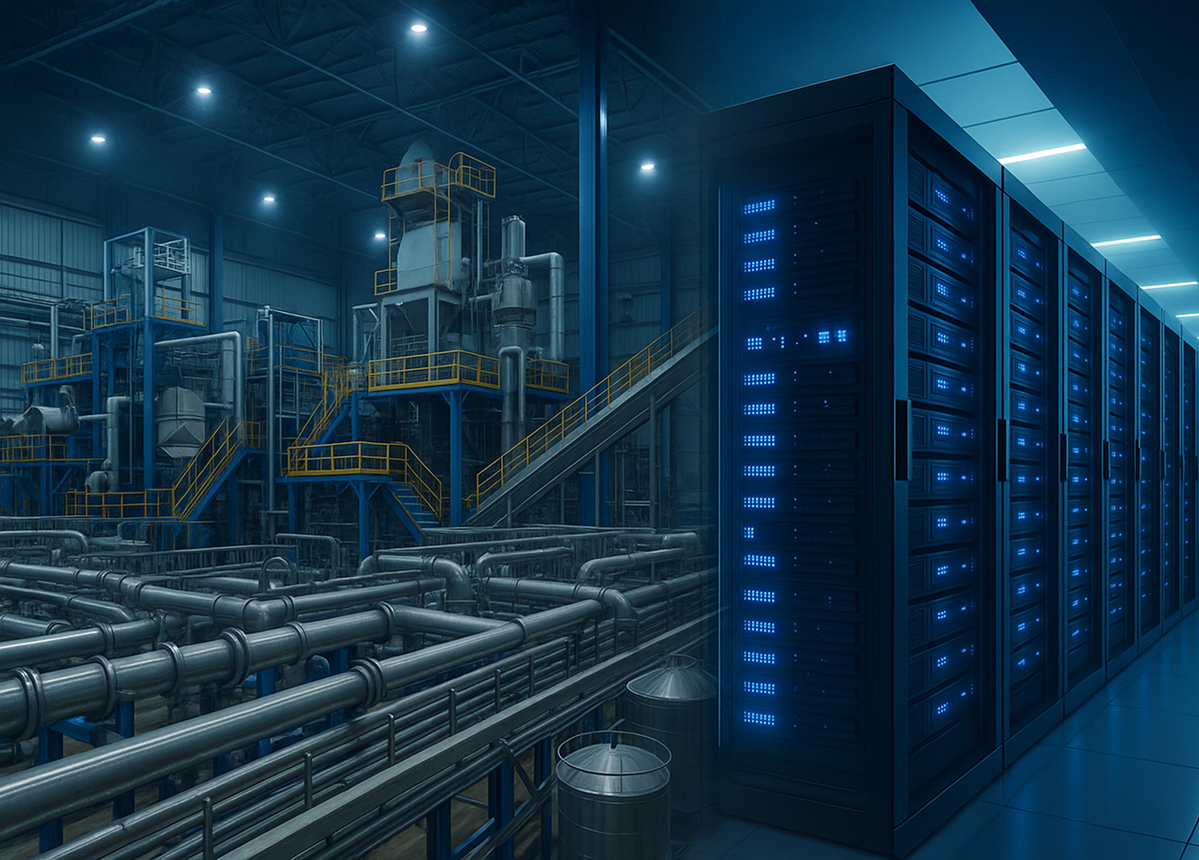
A European industrial and mining group was running more than 800 servers across fragmented on-prem data centers in several countries. Aging hardware, inconsistent backup policies, and bespoke integrations between plants made every change risky and slow. Planned maintenance still caused unplanned downtime for production and logistics systems, and the organization had no clear view of total infrastructure cost.
LeanCoded partnered with the group to consolidate multiple data centers into Microsoft Azure using a five-wave on-premise to cloud program. Over 18 months, we migrated and modernized 800+ servers and 250+ applications into a standardized Azure landing zone, applying devops consulting services, cloud security assessments, and cloud cost optimization solutions to reach ~99.95% availability while reducing infrastructure TCO by 28%.
Turning Fragmented Data Centers into One Azure Backbone
Before the project, each region maintained its own hardware stack, backup routines, and monitoring tools. M&A activity had left the group with overlapping ERP instances, custom MES integrations, and dozens of local file servers. Incident data showed that 60% of P1 outages were caused by infrastructure failures or misconfigured changes across these on-prem environments. LeanCoded ran a structured discovery covering 820 servers and 270 applications, building a fact-based inventory and risk profile that guided the five-wave cloud migration automation plan instead of relying on assumptions.
At the same time, leadership wanted to move faster on analytics and IoT programs coming from the plants. On-prem systems limited how quickly new data flows could be integrated and scaled. LeanCoded designed a production-grade Azure landing zone, aligning identity, networking, and governance patterns with group policies for safety-critical IT. By combining network security cloud computing practices with data warehousing services and an enterprise software solution approach, we ensured that the new cloud backbone could support both legacy workloads and future analytics initiatives without another large-scale replatforming.
Building a Migration Factory, Not One-Off Projects
LeanCoded treated the program as an industrialized factory rather than a collection of unique migrations. After discovery, applications were grouped into five migration waves of roughly 160 servers each, aligned to business domains and maintenance windows. For every wave, the team followed the same pattern: detailed planning, environment build-out, rehearsal, cutover, and stabilization. Standardized runbooks, automated deployment pipelines, and reusable templates for cloud devops reduced preparation time per wave by 35% between wave one and wave five.
To keep risk under control, we classified applications into “lift-and-shift”, “replatform”, and “modernize later” categories. Around 70% of workloads were moved using streamlined lift-and-shift into Azure IaaS, 20% were replatformed to PaaS services, and 10% were flagged for modernization after the migration. This allowed the client to realize savings quickly while building a foundation for future change. Throughout the program, LeanCoded combined software development outsourcing patterns with the client’s own IT team, acting as an IT outsourcing services company for cloud expertise while upskilling internal engineers on modern software development services and operations.
Business case and baseline
Azure landing zone and security
Five-wave migration execution
Resilience, monitoring, and SRE
Knowledge transfer and operating model
How LeanCoded Made Cloud the New Normal
The goal was not just to move servers, but to give the group a repeatable way to run and grow in the cloud. LeanCoded combined engineering depth and structured delivery so that Azure became a stable backbone for core systems and future initiatives, not another isolated environment.
- Industrialized migration factory
Standardized assessment, planning, and execution templates allowed five migration waves to run predictably, reusing patterns and reducing lead time per wave. - Security and compliance built in
From day one, identity, networking, and logging followed group security standards. Network security cloud computing controls were implemented consistently across regions, simplifying audits. - Cost control by design
We applied cloud cost optimization solutions to right-size VMs, consolidate storage, and retire unused assets. Clear cost allocation per business unit made cloud spend transparent instead of a shared black box. - Future-ready data platform
By combining Azure services with data warehousing services, the new environment supports upcoming analytics, IoT, and reporting initiatives without major rework.
Measured Impact on Availability and TCO
Within six months of completing the fifth migration wave, core production and logistics applications in Azure achieved an average monthly availability of ~99.95%, compared to 99.4% in the legacy data centers. P1 incidents related to infrastructure dropped by 41%, and mean time to recover (MTTR) for critical services improved by 37% thanks to standardized recovery runbooks and unified monitoring.
On the cost side, the consolidated Azure environment delivered a 28% reduction in infrastructure TCO over three years versus the “do nothing” on-prem scenario, including the cost of the migration program itself. Hardware refreshes, data-center leases, and legacy backup tooling could be retired or downsized. By engaging LeanCoded as a specialized cloud software development company and leveraging software development outsourcing through an IT outsourcing services company model, the group avoided long lead times on hiring rare cloud skills in-house while building a platform their own teams can now operate and extend.